| 正面 | 1669.fruit 英 [fruːt]美 [frut]     |
|---|---|
| 背面 |     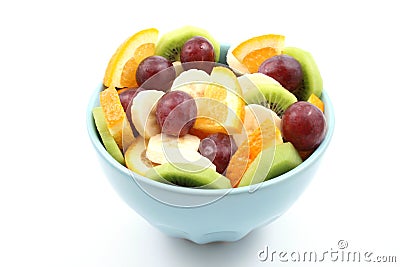 释义: 1、re- "again" + cord-.2、该词可以说与remember是殊途同归。3、该词的最初含义为:repeat, reiterate, recite, tell, relate, report, make known; remember, call to mind, think over, be mindful of. 其后,其含义演变为:set down in writing, put sound or pictures on disks, tape, etc.4、记录、记载从某种意义上讲也就是对其说的内容进行重复、复述,将其记住。记录下来的东西其实就是无声的话语,有形的记忆,看得到的记忆。n. 水果;产物vi. 结果实vt. 使……结果实n. (Fruit)人名;(法)弗吕;(英)弗鲁特 例句: 1. I tend to stick to fresh fruit for pudding.我一直坚持用新鲜水果做甜点。 fruit 水果来自fructus, 果实,来自PIE*bhrug, 农业收成,收获,进一步来自PIE*bher, 裂开,词源同bore, break. 即果实成熟裂开之意。原指土地上的各种收成,后固定指水果。 fruitfruit: [12] English acquired fruit via Old French fruit from Latin frūctus, a source more clearly on display in fructify [14], fructose [19], etc. The underlying meaning of the Latin noun seems to have been ‘enjoyment of that which is produced’, for it came, like frūx (source of English frugal), from a base which also produced the verb fruī ‘enjoy’.By classical times, however, it had passed from ‘enjoyment’ to the ‘product’ itself – the ‘rewards’ of an enterprise, the ‘return’ on an investment, or the ‘produce’ obtained from the soil or from farm animals. When it reached English this latter meaning had narrowed down somewhat, but it was still capable of being used far more broadly, for any ‘edible vegetable’, than we would do today, except in certain archaic expressions such as ‘fruits of the earth’.The modern restriction to the edible reproductive body of a tree, bush, etc dates from the 13th century. English retains, of course, the more general sense ‘product, result’, although this is now usually expressed by the plural fruits.=> fructify, frugalfruit (n.)late 12c., "any vegetable product useful to humans or animals," from Old French fruit "fruit, fruit eaten as dessert; harvest; virtuous action" (12c.), from Latin fructus "an enjoyment, delight, satisfaction; proceeds, produce, fruit, crops," from frug-, stem of frui "to use, enjoy," from suffixed form of PIE *bhrug- "agricultural produce," also "to enjoy" (see brook (v.)). The Latin word also is the source of Spanish fruto, Italian frutto, German Frucht, Swedish frukt-. Originally in English meaning all products of the soil (vegetables, nuts, grain, acorns); modern narrower sense is from early 13c. Also "income from agricultural produce, revenue or profits from the soil" (mid-14c.), hence, "profit," the classical sense preserved in fruits of (one's) labor. Meaning "offspring, progeny, child" is from mid-13c.; that of "any consequence, outcome, or result" is from late 14c. Meaning "odd person, eccentric" is from 1910; that of "male homosexual" is from 1935, underworld slang. The term also is noted in 1931 as tramp slang for "a girl or woman willing to oblige," probably from the fact of being "easy picking." Fruit salad recorded from 1861; fruit-cocktail from 1900; fruit-bat by 1869." |