| 正面 | 12133.wasp 英 [wɒsp]美 [wɑsp]     |
|---|---|
| 背面 |     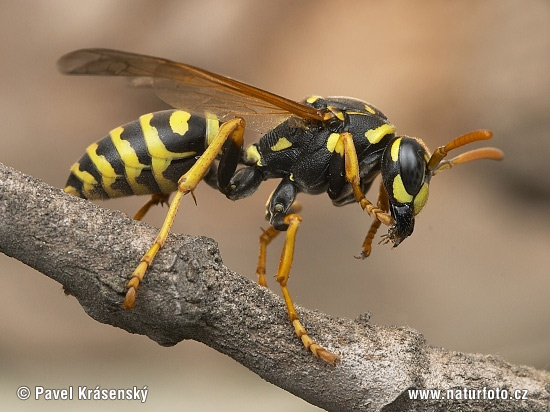 释义: 1. ex- "out" + hal- "breathe" + -e.2. => breathe out, evaporate.n. 黄蜂;[昆] 胡蜂;易怒的人vi. 黄蜂似的直扑 例句: 1. The dress exaggerates her wasp waist and enlarges her bosom.那件连衣裙凸显了她的蜂腰,也让她的胸部看起来更丰满。 wasp 黄蜂来自PIE*wopsa,编织,构造,来自PIE*webh,编织,纺织,词源同web,weave.字母p,s置换。用于指黄蜂。 waspwasp: [OE] Etymologically, the wasp may be the ‘weaver’. The word comes ultimately from Indo- European *wobhes- or *wops-, which was probably derived from the base *webh-, *wobh- ‘weave’ (source of English weave, web, etc); the allusion is presumably to the papery nest which many species construct. West Germanic took this over as *wabis- or *waps-, and the process of metathesis (reversal of sounds) produced English wasp and German wespe. From the same Indo-European ancestor come Latin vespa (source of French guêpe, Italian vespa, and Spanish avispa) and Russian osa.=> weave, webwasp (n.)Old English wæps, wæsp "wasp," altered (probably by influence of Latin vespa) from Proto-Germanic *wabis- (cognates: Old Saxon waspa, Middle Dutch wespe, Dutch wesp, Old High German wafsa, German Wespe, Danish hveps), from PIE *wopsa-/*wospa- "wasp" (cognates: Latin vespa, Lithuanian vapsa, Old Church Slavonic vosa "wasp," Old Irish foich "drone"), perhaps from *webh- "weave" (see weave (v.)). If that is the correct derivation, the insect would be so called for the shape of its nest. Of persons with wasp-like tendencies, from c. 1500. Wasp-waist in reference to women's figures is recorded from 1870 (wasp-waisted is from 1775).WASP (n.)acronym for White Anglo-Saxon Protestant, by 1955." |